Elevating Visual Communication: The Strategic Power of Bullet Arrows and Abstract Infographic Design
In the rapidly evolving landscape of digital communication, the ability to convey complex information quickly and aesthetically is no longer a luxury—it is a necessity. For professionals, creators, entrepreneurs, and marketers, the tools used to structure content can significantly influence audience engagement and retention. This is where the strategic implementation of Bullet Arrows and abstract geometric design elements comes into play. These are not merely decorative accents; they are functional components of modern visual storytelling that bridge the gap between dense data and human cognition.
The shift toward high-resolution, vector-based infographic elements reflects a broader industry trend toward polished, professional, and scalable design assets. As workflows become more digital-first and remote, the demand for assets that maintain integrity across various platforms—from high-density retina displays to printed collateral—has surged. Understanding the utility of these design elements requires looking beyond their surface appearance and examining how they fit into the current ecosystem of creative business and technology.
The Evolution of Visual Hierarchy in Digital Content
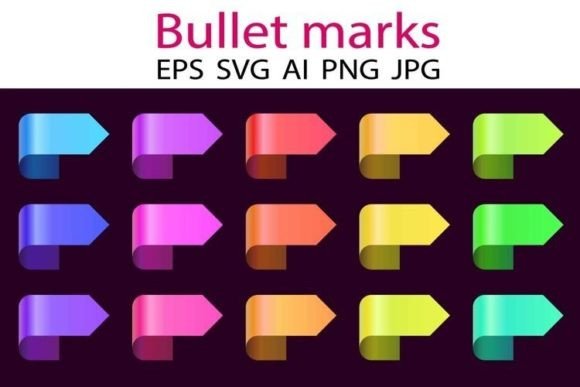
Traditional bullet points have long served as the backbone of structured text, offering a simple way to break down lists. However, in an era characterized by information overload, standard circular or square bullets often fail to capture attention or guide the eye effectively. Bullet Arrows represent an evolution in this basic utility. By introducing directionality and movement, arrow-shaped markers subtly instruct the reader on how to process information, creating a natural flow from one point to the next.
This directional cueing is critical in infographic design. When users scan content, their eyes follow lines and shapes. An arrow does more than list; it implies progression, cause-and-effect, or priority. This aligns with contemporary user experience (UX) principles that prioritize intuitive navigation and cognitive ease. For marketers and freelancers, utilizing such elements means reducing the cognitive load on their audience, thereby increasing the likelihood that the core message is understood and remembered.
Abstract Geometric Design and the Modern Aesthetic
Beyond functionality, there is the matter of aesthetics. The modern professional aesthetic leans heavily toward abstract geometric designs, particularly those featuring soft glossy gradients and 3D rendering effects. This style is not arbitrary; it reflects a technological sophistication that resonates with today’s consumers. The use of soft glossy gradients adds depth and dimension to flat screens, making digital content feel more tactile and premium.
When these gradients are applied to vector bullet markers, the result is a set of infographic design elements that feel both contemporary and versatile. The interplay of light and shadow in 3D-rendered elements creates a sense of realism that pure flat design often lacks. This visual richness helps brands stand out in crowded feeds, whether on social media platforms or within detailed whitepapers. For entrepreneurs and creators, adopting this style signals attention to detail and a commitment to quality.
Technical Versatility: The Importance of File Formats
A crucial aspect of integrating these design elements into professional workflows is technical versatility. The value of a design asset is largely determined by its adaptability across different mediums and software environments. High-quality resources typically include a comprehensive suite of file formats to ensure seamless integration into any project. Understanding these formats is essential for maximizing the utility of your design toolkit.
- JPG - HI resolution: Ideal for quick previews and web-based applications where transparency is not required. With a density of 300 ppi, these 15 included files ensure crisp visuals for high-density displays.
- PNG - With transparent background: Perhaps the most versatile for digital compositing. The 15 included PNGs at 300 ppi allow designers to overlay bullet arrows onto any background color or image without unsightly white boxes, maintaining the integrity of the glossy gradient effects.
- SVG - Vector graphics: Scalable Vector Graphics are indispensable for responsive web design. These 15 included files ensure that your bullet markers remain sharp at any size, from a tiny mobile icon to a large desktop header, without pixelation.
- AI - Vector file for Adobe Illustrator: For professionals who need to customize colors, shapes, or gradients, the AI format provides full editability within the industry-standard software, allowing for bespoke adjustments to match brand guidelines.
- EPS - Vector file version EPS 10: Ensuring compatibility with older software versions and other vector-based programs, these 15 included files guarantee that the assets can be used in diverse printing and publishing workflows.
This multi-format approach addresses the changing needs of modern workflows. A freelancer might need an SVG for a client’s website, while a corporate marketer might require an EPS for a printed annual report. Having access to all these formats within a single package streamlines the creative process, eliminating the need for conversion tools that can sometimes degrade quality.
Why Professionals Are Prioritizing Premium Design Assets
The attention being paid to specialized design elements like Bullet Arrows is driven by a shift in consumer expectations. Audiences are becoming increasingly discerning. They associate high-quality visuals with credibility and authority. In a competitive market, the difference between a generic presentation and one enhanced with professional, 3D-rendered infographic elements can be the difference between securing a client or losing their interest.
Furthermore, the rise of no-code and low-code platforms has democratized design. More entrepreneurs and small business owners are creating their own marketing materials. However, without access to premium assets, these materials often look amateurish. High-resolution, pre-designed vector sets empower non-designers to achieve a polished look without needing advanced graphic design skills. This democratization of quality is a significant trend in the creative industry.
Integrating Bullet Arrows into Strategic Communication
To effectively leverage these tools, one must understand their contextual application. Bullet Arrows are not suitable for every type of content. They excel in scenarios where direction, growth, or sequence is implied. For instance, in a business proposal outlining a three-step strategy, using arrow-shaped bullets can visually reinforce the idea of forward momentum. In contrast, a static list of features might benefit more from subtle geometric shapes that imply stability rather than movement.
Consider the following practical observations for integrating these elements:
- Maintain Consistency: Use the same style of gradient and 3D effect throughout a document. Mixing flat icons with glossy 3D arrows can create visual dissonance.
- Respect White Space: High-detail elements like glossy gradients need room to breathe. Overcrowding them diminishes their impact and can make the design feel cluttered.
- Color Harmony: While the gradients are pre-designed, ensure they complement your overall brand palette. The soft nature of these gradients allows them to blend well with both vibrant and muted backgrounds.
- Purposeful Direction: Ensure the direction of the arrow aligns with the reading flow. In left-to-right languages, arrows pointing right or down are most natural for lists.
The Broader Impact on Creative Workflows
The adoption of sophisticated vector bullet marker sets is part of a larger movement toward efficiency and quality in creative workflows. As teams become more distributed, the need for standardized, high-quality assets that can be shared and used consistently across departments grows. A centralized library of infographic design elements ensures that whether a blog post is written by the content team or a slide deck is created by sales, the visual language remains cohesive.
Moreover, the emphasis on vector graphics speaks to the future-proofing of digital content. As screen resolutions continue to increase and new devices emerge, raster images often struggle to keep up. Vector files, by definition, are resolution-independent. Investing in SVG and AI formats ensures that your visual assets remain relevant and crisp regardless of technological advancements in display technology.
In conclusion, Bullet Arrows and abstract geometric design elements are more than just aesthetic choices; they are strategic tools for enhancing communication. By combining directional cues with modern, glossy 3D aesthetics, these assets help professionals cut through the noise of the digital age. Whether you are a marketer crafting a campaign, an entrepreneur pitching to investors, or a freelancer building a portfolio, the thoughtful integration of these high-resolution, versatile design elements can elevate your work, improve clarity, and reinforce your professional brand. The key lies in understanding not just how to use them, but why they matter in the context of modern visual literacy.