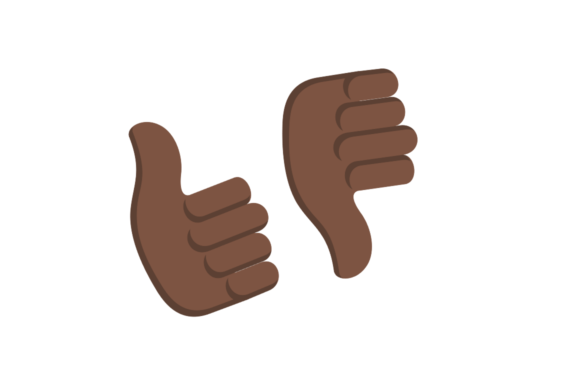
Emoji Thumb Up Down Dark Toned Skin: A Practical Guide for Designers and Creators
In the evolving landscape of digital communication, visual assets play a pivotal role in how messages are received and interpreted. Among the myriad of graphic resources available today, the Emoji Thumb Up Down Dark Toned Skin stands out as a specific, high-utility asset for modern creators. This resource is not merely a decorative element; it represents a shift toward more inclusive, nuanced, and visually engaging digital interactions. For professionals working in e-commerce, web design, or print-on-demand (POD) sectors, understanding the distinct value of this asset is crucial for making informed design decisions.
The core appeal of this graphic lies in its dual nature. It combines the universally recognized symbolism of approval and disapproval—the thumb up and thumb down—with a specific aesthetic choice: dark-toned skin representation. This combination addresses two significant needs in contemporary design: the demand for diversity in visual media and the need for clear, immediate visual cues in user interfaces and marketing materials. By offering these icons in high-resolution PNG format, creators gain flexibility that standard emoji keyboards often lack, allowing for seamless integration into broader design systems.
Understanding the Distinct Value of Dark-Toned Emoji Assets
Standard emoji sets provided by operating systems are functional but limited. They are designed for general text-based communication, not for professional graphic design. When a designer incorporates an Emoji Thumb Up Down Dark Toned Skin into a project, they are making a deliberate choice to enhance representation. The inclusion of dark-toned skin variants is essential for creating content that resonates with a global, diverse audience. It moves beyond tokenism by providing high-quality, scalable assets that can be used consistently across various platforms.
What makes this specific asset distinct is its versatility. Unlike flat, vector-only icons that may feel sterile, emoji-style graphics carry an inherent approachability. They soften the tone of critical feedback or negative reviews while maintaining clarity. For instance, in a customer service context, using a friendly, dark-toned thumb-down icon can mitigate the harshness of a complaint form, making the user experience feel more human and less bureaucratic. This psychological nuance is difficult to achieve with generic, monochrome icons.
Furthermore, the "creative and playful" aspect mentioned in many product descriptions is not just marketing fluff; it is a functional design trait. Playful elements increase engagement rates in social media posts and email newsletters. When users see familiar, relatable imagery, they are more likely to interact with the content. The dark-toned variation ensures that this relatability extends to users who rarely see themselves represented in standard default emoji sets, thereby fostering a deeper connection between the brand and the consumer.
Comparing Formats: PNG vs. Vector and Standard Emojis
When evaluating digital assets, format is a primary decision factor. The Emoji Thumb Up Down Dark Toned Skin is typically offered as a high-resolution PNG file. Understanding why this format is chosen over others helps designers determine if it fits their workflow.
- PNG vs. JPEG: PNGs support transparency, which is critical for overlaying icons on colored backgrounds, images, or complex web layouts without unsightly white boxes. JPEGs do not support transparency and often introduce compression artifacts, making them unsuitable for crisp iconography.
- PNG vs. SVG/Vector: While SVGs are infinitely scalable and ideal for responsive web design, PNGs are often preferred for social media graphics and POD applications where raster effects, shadows, or specific textures are part of the design. High-res PNGs provide a "what you see is what you get" reliability, ensuring that the shading and tonal details of the dark skin tone render exactly as intended across different devices.
- Custom Assets vs. System Emojis: Relying on system emojis means your design looks different on an iPhone versus an Android device. Using a dedicated Emoji Thumb Up Down Dark Toned Skin PNG ensures brand consistency. The icon will look identical whether viewed on a desktop, tablet, or mobile device, preserving the integrity of the design.
For print-on-demand projects, such as t-shirts, mugs, or posters, high-resolution PNGs are often the standard requirement. Printers need sufficient pixel density to ensure the image does not appear blurry. The provision of two high-res files usually implies variations in pose, expression, or perhaps light and shadow adjustments, giving designers options to match the specific mood of their campaign.
Best-Fit Use Cases and Practical Applications
Identifying when to use this asset is as important as knowing how to use it. The Emoji Thumb Up Down Dark Toned Skin is best suited for projects that require an approachable, colorful, and socially aware theme. Here are several practical scenarios where this asset excels:
- Social Media Engagement Campaigns: Brands often ask followers to "like" or "dislike" certain options in polls. Using customized, inclusive icons instead of standard platform buttons can make the post stand out in a crowded feed. The dark-toned skin adds a layer of authenticity and inclusivity that can boost engagement among diverse demographics.
- E-Commerce Product Reviews: Online stores can use these icons in review sections or promotional emails. For example, a "Thumbs Up" graphic can highlight top-rated products, while a "Thumbs Down" might be used humorously to show what problems a product solves (e.g., "Thumbs down to bad sleep, thumbs up to our mattress").
- User Interface (UI) Micro-interactions: In app design, feedback mechanisms are crucial. Custom icons can replace standard buttons to create a unique brand voice. The playful nature of emoji-style graphics can reduce friction in user interactions, making feedback feel less like a chore and more like a conversation.
- Educational and Training Materials: In corporate training or educational apps, these icons can be used to quiz users or indicate correct/incorrect answers. The inclusive representation ensures that all learners feel seen and respected, which is increasingly important in globalized learning environments.
Limitations and Considerations for Designers
While the Emoji Thumb Up Down Dark Toned Skin offers significant benefits, it is not a one-size-fits-all solution. Designers must consider certain tradeoffs. First, the playful style may not align with highly formal or corporate brands that prioritize minimalism and seriousness. In legal, financial, or medical contexts, overly casual imagery can undermine credibility. In such cases, standard, neutral icons might be more appropriate.
Second, color harmony is a challenge. Emoji graphics are inherently colorful and detailed. Integrating them into a minimalist, monochrome, or pastel-themed design requires careful balancing. Designers may need to adjust opacity, add borders, or place the icons on contrasting backgrounds to ensure they do not clash with the overall aesthetic. The dark skin tone, while beautiful and necessary for representation, has specific lighting and shading characteristics that must complement the surrounding color palette.
Additionally, accessibility remains a key concern. While visual diversity is important, icons should never replace text labels entirely. Screen readers may not interpret custom PNGs unless proper alt text is provided. Designers must ensure that the Emoji Thumb Up Down Dark Toned Skin is accompanied by descriptive text for users with visual impairments, maintaining both inclusivity in representation and accessibility in function.
Making the Right Choice for Your Project
Deciding whether to incorporate this asset into your design toolkit depends on your project's goals and audience. If your brand values inclusivity, playfulness, and modern digital aesthetics, this resource is a strong candidate. It allows you to communicate clear binary choices (yes/no, good/bad) while simultaneously signaling social awareness and attention to detail.
However, if your project requires strict brand guidelines that prohibit illustrative styles, or if you need infinite scalability for large-format printing where vector files are mandatory, you may need to explore alternative formats. Always evaluate the technical requirements of your final output medium. For web and social media, high-res PNGs are excellent. For large-scale physical signage, verify the resolution limits of the provided files.
Ultimately, the Emoji Thumb Up Down Dark Toned Skin is more than just a graphic; it is a tool for better communication. It bridges the gap between functional UI elements and expressive, inclusive design. By choosing assets that reflect the diversity of your audience, you create a more welcoming and engaging digital environment. As with any design resource, the key is intentional usage—ensuring that the style, format, and message align seamlessly with your broader creative strategy.