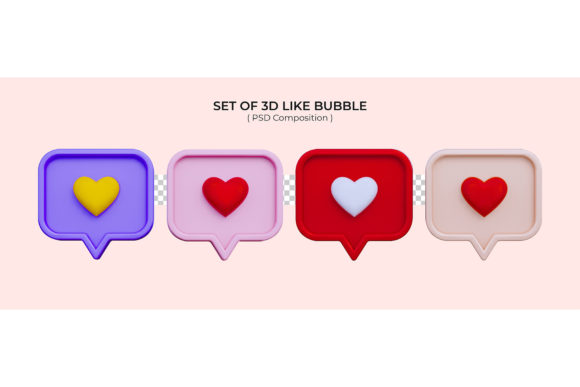
Set of Like Notification 3d Icon: Elevating Digital Engagement with Modern Design Assets
In the rapidly evolving landscape of digital communication, visual cues have become the primary language of interaction. Among these cues, the "like" notification stands out as a universal symbol of approval, validation, and social connection. As user interfaces transition from flat, two-dimensional designs to more immersive, tactile experiences, the demand for high-quality, three-dimensional assets has surged. A Set of Like Notification 3d Icon is no longer just a decorative element; it is a critical component in crafting engaging, modern user experiences that resonate with contemporary audiences.
For designers, marketers, and content creators, understanding the shift toward 3D aesthetics is essential. This evolution reflects broader changes in technology, user expectations, and brand identity. By leveraging versatile design resources—such as those provided in PSD and PNG formats with smart object capabilities—professionals can streamline their workflows while maintaining high visual standards. This article explores the significance of these assets, their role in current design trends, and how they can be effectively integrated into various digital projects.
The Shift from Flat to Spatial Design
For nearly a decade, flat design dominated the digital world. Characterized by minimalism, clean lines, and solid colors, it offered clarity and speed. However, as screens became higher resolution and devices more powerful, users began to crave depth and realism. The introduction of spatial design principles, driven by advancements in augmented reality (AR), virtual reality (VR), and sophisticated rendering engines, has brought dimensionality back into focus.
A Set of Like Notification 3d Icon embodies this shift. Unlike its flat counterparts, a 3D icon offers volume, shadow, and texture. These elements create a sense of tangibility, making digital interactions feel more physical and satisfying. When a user sees a glossy, rounded heart or a thumbs-up icon that appears to pop off the screen, the psychological impact is immediate. It feels more rewarding, more significant, and more aligned with the high-fidelity environments we now inhabit.
This trend is not merely aesthetic; it is functional. Depth helps establish hierarchy. In a cluttered interface, a 3D notification can draw the eye more effectively than a flat one, guiding user attention to key actions or feedback moments. For businesses, this means higher engagement rates and clearer communication of status updates.
Versatility in File Formats: PSD, PNG, and Smart Objects
The utility of any design asset lies in its adaptability. A static image may look good in one context but fail in another. This is why the technical specifications of a set of like notification 3d icon - PSD File - PNG file - Smart object - Easy to edit are crucial for professional workflows.
The Power of PSD and Smart Objects
Photoshop Document (PSD) files remain the industry standard for layered, editable graphics. When a 3D icon set is delivered as a PSD with smart objects, it offers unparalleled flexibility. Smart objects allow designers to replace textures, change colors, or adjust lighting without destroying the original image quality. For a brand that needs to match its specific color palette, this feature is invaluable. Instead of spending hours re-rendering 3D models, a designer can simply double-click the smart object, apply a new hue, and save. The changes propagate instantly across all instances of the icon.
This ease of editing supports rapid iteration. In agile development environments, where designs often change based on user testing or stakeholder feedback, having assets that are easy to edit reduces bottlenecks. It empowers teams to experiment with different looks—matte versus glossy, dark mode versus light mode—without starting from scratch.
The Convenience of PNG Files
While PSDs are ideal for creation and customization, Portable Network Graphics (PNG) files are essential for implementation. PNGs support transparency, allowing 3D icons to sit seamlessly over any background color or image. For web developers and app builders, having pre-rendered PNGs saves time and computational resources. They can be dropped directly into codebases, ensuring consistent appearance across different browsers and devices.
A comprehensive set typically includes multiple angles or states (e.g., active, inactive, hovered). Having both PSD and PNG formats ensures that the asset is useful for both the design phase and the development phase, bridging the gap between creative vision and technical execution.
Enhancing User Experience and Brand Identity
Notifications are more than just alerts; they are micro-interactions that shape the overall user experience (UX). A well-designed like notification can turn a mundane action into a delightful moment. This concept, often referred to as "delight engineering," focuses on creating small, positive emotional responses through design.
Consider a social media platform or an e-commerce site. When a user likes a product or a post, the feedback should be immediate and visually satisfying. A 3D icon that bounces, glows, or expands slightly provides this sensory feedback. It confirms the action and rewards the user, encouraging further interaction. Over time, these small details contribute to a perception of quality and care.
Furthermore, custom 3D icons help strengthen brand identity. Generic, system-default icons make an application feel impersonal. By using a unique Set of Like Notification 3d Icon, brands can inject their personality into the interface. Whether the style is playful and colorful or sleek and monochromatic, the icons become part of the brand’s visual language. This consistency builds trust and recognition, distinguishing the brand in a crowded market.
Practical Applications Across Industries
The relevance of 3D notification icons extends beyond social media. Various sectors are adopting these assets to improve communication and engagement.
- E-Commerce: Wish lists, favorites, and product ratings benefit from tactile icons. A 3D heart icon on a product page can increase conversion rates by making the "save for later" action feel more substantial.
- Education Technology: Gamification is a key strategy in ed-tech. 3D badges, stars, and like icons provide visual rewards for students, enhancing motivation and retention.
- Corporate Communications: Internal collaboration tools use reactions to streamline feedback. A professional yet friendly 3D thumbs-up can soften the tone of digital communication, fostering a more positive workplace culture.
- Content Creation: Bloggers and influencers use these icons in thumbnails and social posts to grab attention. The depth and vibrancy of 3D graphics stand out in feed algorithms, potentially increasing click-through rates.
Best Practices for Implementation
To maximize the impact of a set of like notification 3d icon - PSD File - PNG file - Smart object - Easy to edit, consider the following best practices:
- Maintain Consistency: Ensure that the lighting, perspective, and style of the 3D icons match the rest of your interface. Mismatched styles can create visual dissonance and confuse users.
- Optimize for Performance: While 3D graphics are visually appealing, they can be heavy. Use compressed PNGs for web deployment to ensure fast loading times. Balance visual fidelity with performance metrics.
- Consider Accessibility: Do not rely solely on color or shape to convey meaning. Include alt text for images and ensure that icons have sufficient contrast against their backgrounds. Animations should be subtle and optional for users who prefer reduced motion.
- Test Across Devices: 3D icons may look different on various screens. Test your assets on mobile, tablet, and desktop devices to ensure they remain clear and recognizable at different sizes.
The Future of Digital Interaction
As we move toward more immersive digital environments, the line between the physical and digital worlds continues to blur. The adoption of 3D assets like the Set of Like Notification 3d Icon is a step in this direction. It prepares users and interfaces for a future where spatial computing is the norm.
However, the core principle remains unchanged: design serves function. Whether flat or 3D, the goal is to communicate clearly and efficiently. By choosing high-quality, editable assets, professionals can stay ahead of trends without sacrificing usability. The availability of user-friendly formats like PSDs with smart objects ensures that this transition is accessible to creators of all skill levels.
In conclusion, integrating 3D notification icons into your design toolkit is a strategic move. It enhances visual appeal, improves user engagement, and aligns your brand with modern aesthetic standards. By leveraging versatile, easy-to-edit resources, you can create dynamic, responsive interfaces that resonate with today’s digitally savvy audience. The investment in quality design assets pays dividends in user satisfaction and brand loyalty, making it a worthwhile consideration for any forward-thinking project.